Trump Ukraine Peace Talks: Stunning Update on Progress


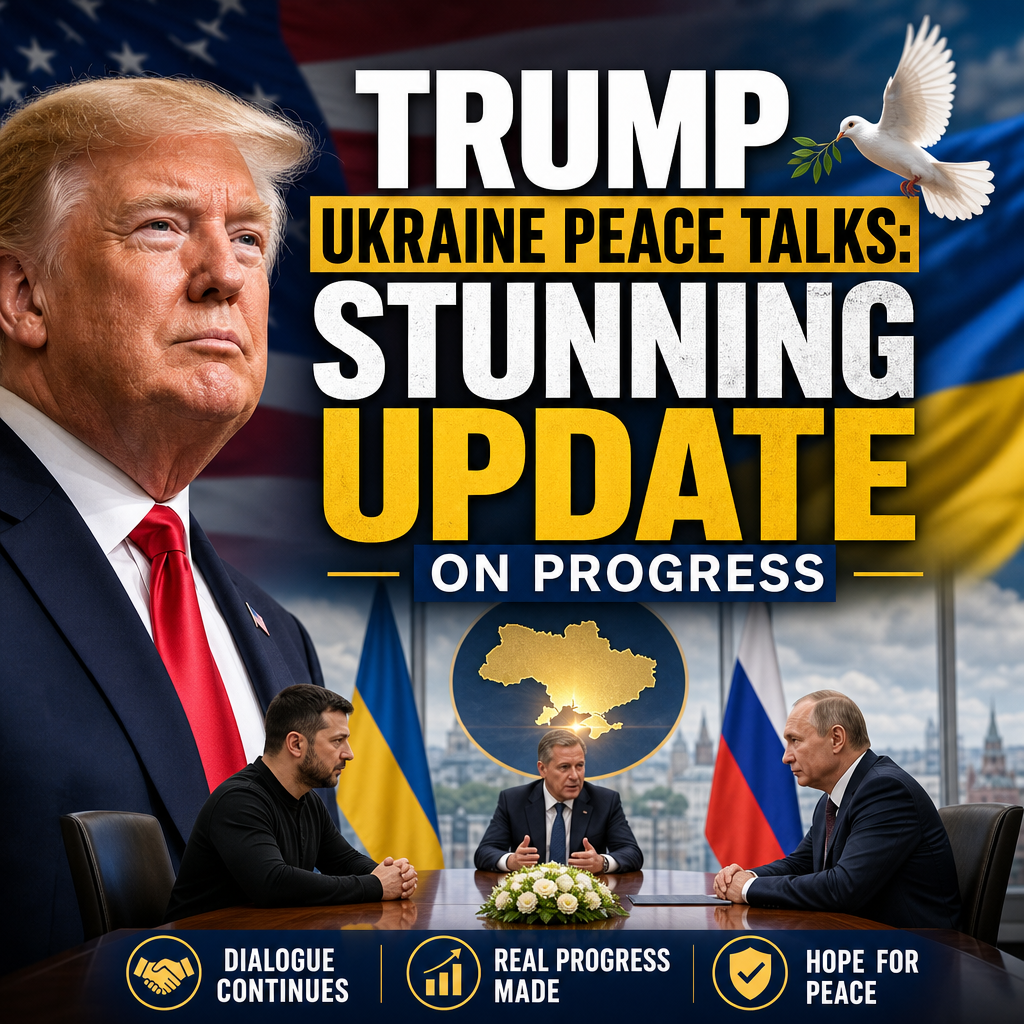
Trump Ukraine peace talks are back in the spotlight, and the latest reporting suggests the idea is still politically potent even if the road to any real settlement remains narrow.
For supporters of Donald Trump, the appeal is obvious: he has long presented himself as the kind of leader who can force fast negotiations where others have only managed stalemate. For critics, the renewed attention is less about diplomacy than about election-season messaging and the danger of oversimplifying a war that has already defeated several earlier peace hopes. Across reporting from RT, Al Jazeera, and Sky News, one common thread stands out: there may be movement in the rhetoric around peace, but there is far less agreement about what that movement actually means in practice.



What the latest Trump Ukraine peace talks update really suggests
The clearest takeaway from the current coverage is that the conversation has shifted from “can talks happen?” to “what would talks even look like?” That distinction matters. In principle, nearly everyone says peace is desirable. In reality, the parties involved have sharply different red lines.
RT’s coverage frames Trump’s renewed peace push as evidence that a deal could be resurrected if political will returns to the White House. That perspective reflects a broader pro-negotiation argument: that the conflict has dragged on too long, costs too many lives, and should be approached with pragmatism rather than maximalist goals. In that view, the key issue is not whether compromise is uncomfortable, but whether leaders have the courage to accept it.




Al Jazeera’s reporting, however, tends to emphasize the structural obstacles. Ukraine has consistently said it will not accept a settlement that rewards territorial conquest, while Russia has shown little sign of backing away from gains it sees as strategic and irreversible. That leaves almost no room for a “quick win” peace formula. Even if Washington changes tone, the core dispute remains: Ukraine wants security and sovereignty restored; Russia wants recognition of territorial realities it helped create by force.
Sky News has highlighted a third angle: the political and diplomatic uncertainty hanging over Europe and NATO partners. European governments are watching Trump’s comments carefully because his return to power could reshape the security architecture supporting Ukraine. Some officials may quietly welcome any initiative that reduces battlefield pressure, but many are also wary that a rushed deal could leave Ukraine weaker and Russia emboldened. That fear is not abstract. If a peace plan is seen as punitive to Kyiv, it could fracture Western unity and undermine future deterrence.
Why the debate is so divided
The disagreement is not just about personalities. It is about strategy, trust, and what counts as success.
Here are the main fault lines shaping the debate:
– Speed versus durability: A fast agreement might stop the fighting temporarily, but a weak settlement could collapse later.
– Negotiation versus leverage: Critics argue talks only work when both sides believe continued war is worse than compromise.
– Security guarantees: Ukraine and its allies want credible protection, not just signatures on paper.
– Territory: Any peace process must confront the reality that land control is the central issue, and neither side has shown much flexibility.
– Domestic politics: Trump’s approach is inseparable from U.S. political dynamics, which makes foreign policy goals harder to separate from campaign-style promises.
This is why the same update can sound hopeful in one outlet and deeply cautionary in another. A renewed peace effort is not meaningless, but it is also not the same thing as a viable settlement. That difference is where the current coverage lands most sharply.
The limits of optimism
There is a temptation, especially in wartime, to treat any sign of dialogue as proof that a breakthrough is near. But the evidence so far does not support that optimism. None of the sources reviewed suggest that Moscow and Kyiv are suddenly close to reconciling their positions. Instead, they point to a familiar pattern: public openness to talks, private insistence on incompatible terms.
That leaves Trump’s role ambiguous. On one hand, his brand of deal-making could pressure allies and adversaries to rethink assumptions. On the other, diplomacy by force of personality has limits when the underlying conflict is about national identity, borders, and long-term security. In that context, a peace announcement may be easier to promise than to deliver.
It is also worth noting that “peace talks” can mean very different things. They might be direct negotiations between Russia and Ukraine, indirect shuttle diplomacy through intermediaries, or simply a new U.S.-led effort to test what each side might accept. Those distinctions matter, because they shape expectations. A first conversation is not a settlement. Even a ceasefire is not a durable peace unless it comes with enforcement and guarantees.
A fair reading of the current moment
The most balanced conclusion is that the Trump Ukraine peace talks story reflects a real political opening, but not yet a real diplomatic resolution. Trump’s renewed interest may force the issue back onto the agenda, especially if Western leaders want to avoid being caught flat-footed by a change in U.S. policy. At the same time, the substance of the conflict has not changed enough to make a clean breakthrough likely.
That is why the current update feels “stunning” mainly in the political sense, not necessarily in the diplomatic one. The attention itself is significant. The progress, if any, is still mostly rhetorical.
For now, the evidence suggests three things at once: peace remains widely desired, serious obstacles remain unresolved, and any meaningful breakthrough would require more than a headline-friendly promise. It would need a formula that both Ukraine and Russia can live with—or at least one they believe is less costly than continued war. At the moment, that formula is still out of reach.